Live Review: Flyboy in the Buttermilk Revisited
New York City-based collective New Eyes make their debut by honoring one of culture’s most influential critics.
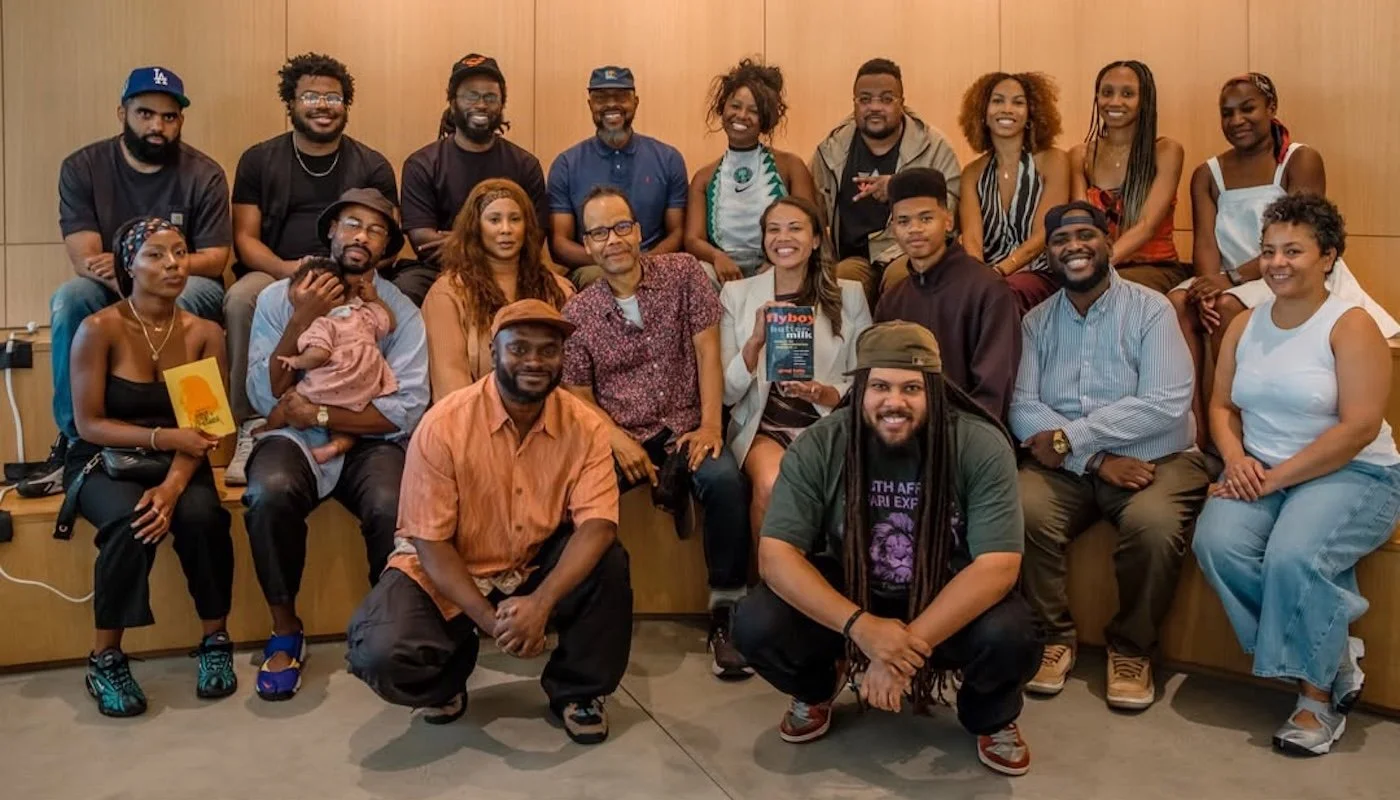
New Eyes Collective at MoCADA, July 25th. Photo: @hellobunni / Instagram
I wouldn’t consider myself a music critic, but ironically, my first-ever byline on a major publication was Pitchfork. It was a track review on the now-inactive column, “The Ones,”in January 2022 — just a month after Greg Tate passed. The series, consisting of bite-sized blurbs about new rap songs, was created by veteran music journalist Timmhotep Aku back in 2018. Now, with New Eyes, Aku is leading something new. After gathering for nearly two years, the collective of Black cultural workers has come forward with a mission carry on the “tradition of criticism, journalism, archiving, and collective resource-sharing.” On July 25th, New Eyes hosted their first event, “Flyboy in the Buttermilk Revisited,” where participants analyzed Greg Tate’s seminal works dissecting how Blackness intersects with music, gender, politics, art, and culture.
The heat is excruciating on that suffocatingly sunny Saturday. Sweat rolls down my back as I walk across Downtown Brooklyn in search of the Museum of Contemporary African Diasporan Art (MoCADA). Still, I’m excited to learn more about the late critic who left such a profound impact on so many of my peers and mentors. The first panel, moderated by The New York Times culture editor Elena Bergeron, focuses on Greg Tate’s style. It’s endearing to hear Clover Hope, Marcus J. Moore, and Dimas Sanfiorenzo — each with impressive accolades of their own — revel in Tate’s no-bullshit, conversational confidence. Hope even admits she tried to copy his cadence during her time at The Village Voice when she was a new writer. Bergeron also poses the question of how to find your own style, especially in an industry fueled by clicks. “I try to write like nobody’s looking,” Marcus J. Moore says. “If you write with intent, the right audience will find you.”
By the end of the talk, I’m overwhelmed with gratitude and motivation. Having only spent four years taking culture journalism seriously as a career, I feel undeserving of being in this room, let alone having relationships with many of the people in it. Thankfully, there’s an intermission, and I’m able to make my rounds and greet everyone I know. The impostor syndrome fades once I remember these are people who were in the same place I’m in now, at one point or another in their careers.
Substance is the second panel’s topic. Aku moderates the discussion with Lawrence Burney, Andre Gee, and Shamira Ibrahim. They talk about Greg Tate’s ability to dig deeper in ways nobody else was thinking. His ability to pack meaningful dialogue into a single essay was remarkable — a “simple” album review could challenge hip-hop’s current gender dynamics. It circles back to Bergeron’s earlier examination of what it means to be a critic, considering the pressure from editors or a crowd you know will nitpick every word you write. “You can’t be a critic and do crowdthink,” Ibrahim says. Burney adds: “You shouldn’t be [writing] to be liked.”
Yesterday, it was announced that VEEPS (owned by Live Nation) laid off almost its entire music writing staff across various publications, including BrooklynVegan and Alternative Press. In a dying industry where people respect culture journalism less and less by the day, it would be much easier to abandon it altogether. But documenting history through culture will always be important, even if corporations won’t fund it because of their own capitalist motivations. New Eyes is calling on all of us to recognize that there’s still work to be done.
“People always say, ‘It’s not that deep,’” Aku says in closing. “But it is that deep. And it’s okay to be that deep, even if it makes people uncomfortable.”